
Enigma Newsletter: No Branches, No Verification, No Problem
No Branches, No Verification, No Problem
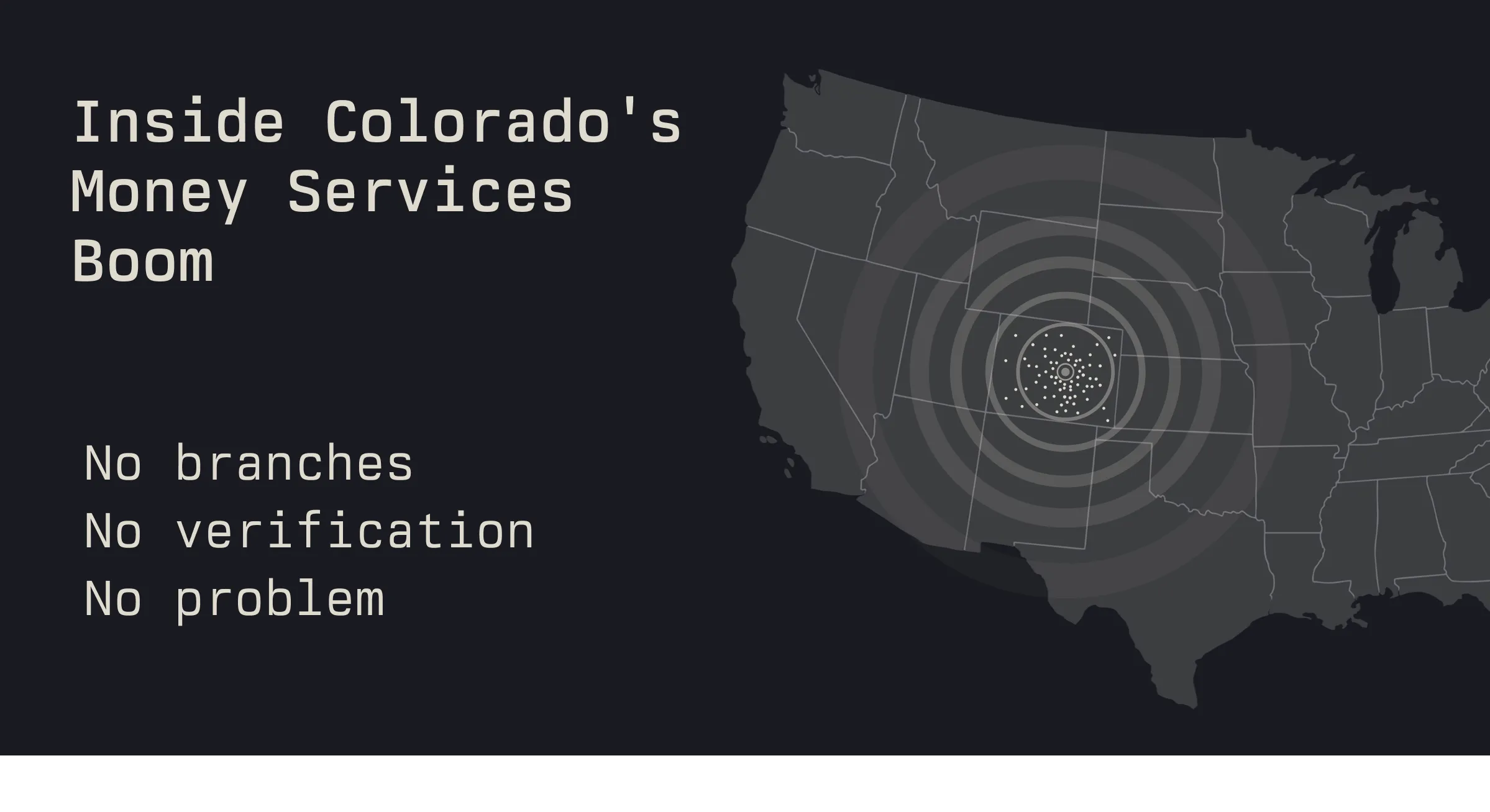
Inside Colorado’s Money Services Boom
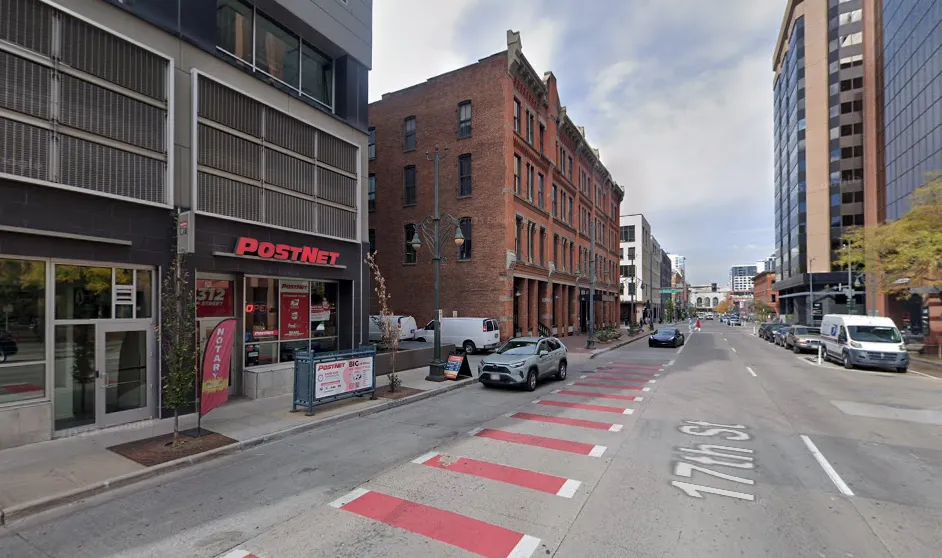
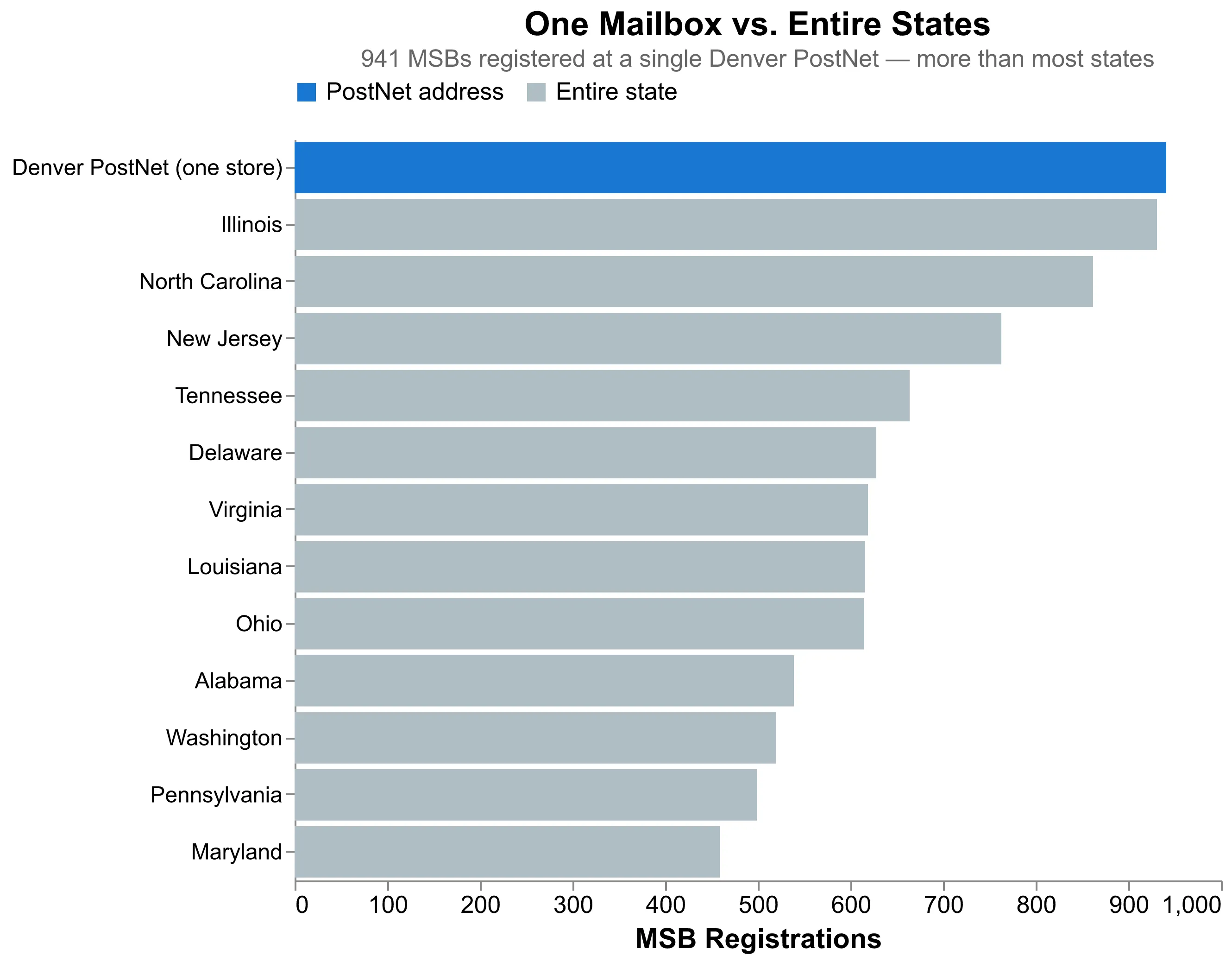
At 1312 17th Street in Denver, across the street from a sandwich shop and a cannabis dispensary, there’s a PostNet store that serves as a commercial mailbox and shipping franchise. It’s also one of the busiest money services addresses in America. 941 entities have registered with the federal government as Money Services Businesses (MSBs) using this single storefront, accounting for about 21% of all MSB registrations in Colorado.
Nearly all report zero branch locations. Nearly all claim to operate in every state and territory. And FinCEN — the Treasury Department bureau that maintains the registry — does not verify the information submitted.
What the data indicates
The federal Bank Secrecy Act requires money services businesses (check cashers, money transmitters, currency exchanges, and similar operations) to register with FinCEN. The registry is a cornerstone of anti-money-laundering enforcement. It’s how the government knows who’s moving money, where, and through what channels. As of February 2026, it contained roughly 35,800 active registrations.
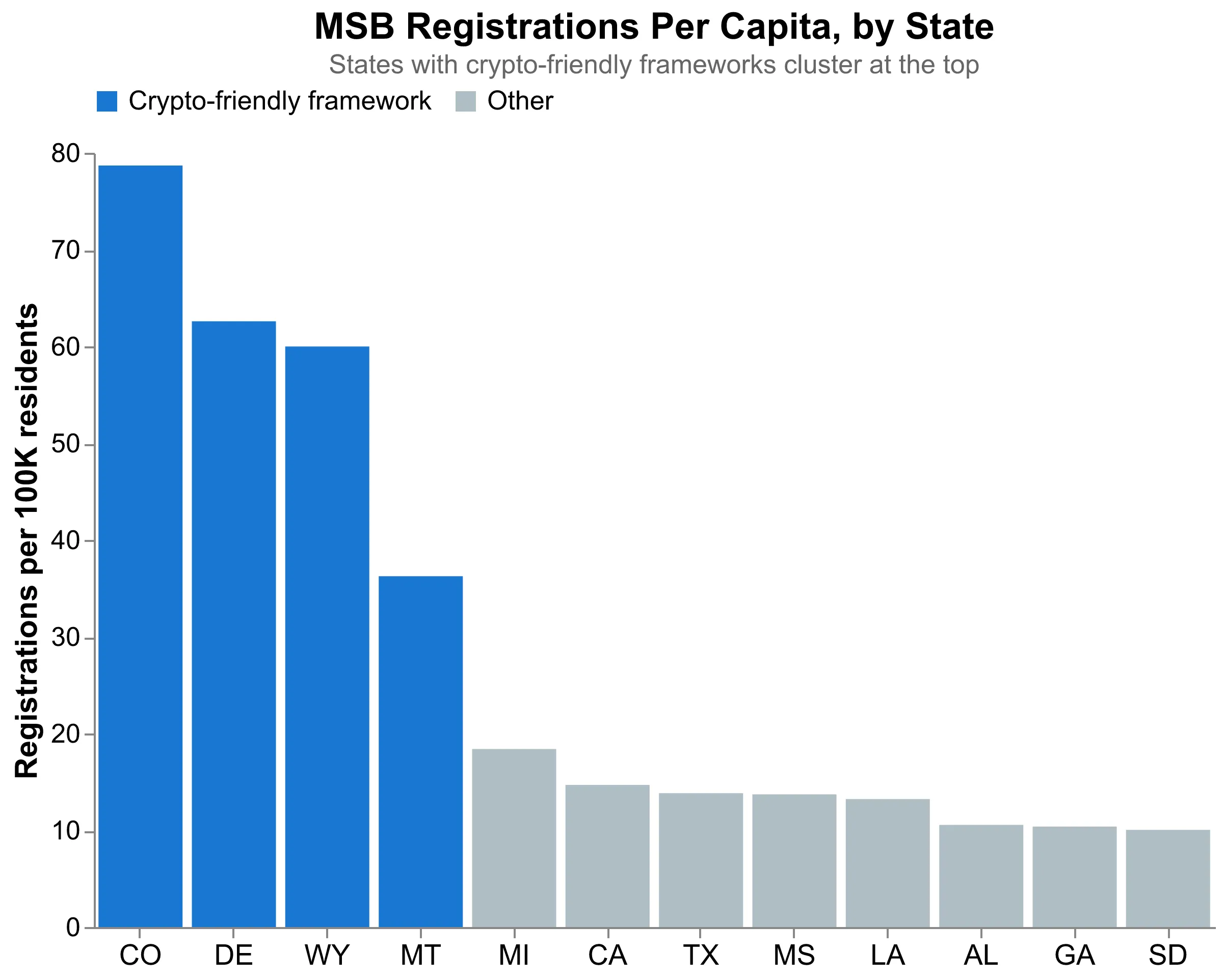
Our analysis of FinCEN’s publicly available data (cross-checked with Enigma’s business identity graph) indicates a striking geographic concentration. Colorado has 78.7 MSB registrations per 100,000 residents — 5 times California’s rate (14.7) and 11 times New York’s (7.1).
But the per-capita figure only tells part of the story. Colorado’s MSB registrants also look different from the rest of the country on nearly every dimension:
- 96.3% report zero branch locations, compared to 76.6% in other states.
- 89.6% claim U.S. Postal Service activity, compared to 10.1% in other states.
- 44.8% check all eight activity categories on the registration form (issuer of traveler’s checks, seller of money orders, check casher, money transmitter, prepaid access seller, currency dealer, and more) compared to just 3.6% in other states.
- 46.5% of all registrants who claim to operate in every U.S. state and territory list a Colorado address.
You’re probably wondering what’s driving this business surge. When we looked at the names of these MSBs, 326 of the 570 companies with cryptocurrency-related names nationally (57%) are registered in Colorado.
Why Colorado?
This concentration of MSBs traces to a specific policy decision. In 2018, Colorado’s Division of Banking issued administrative guidance interpreting the state’s Money Transmitters Act as not applying to businesses that transmit only cryptocurrency. Since crypto is not legal tender, the Division reasoned that transmitting it is not “money transmission” under state law.
The state legislature had actually rejected an explicit exemption bill that same year (SB18-277 failed 15-20 in the Senate). But the administrative guidance achieved much the same effect without a vote. And when Colorado overhauled its money transmission law in 2025 (HB25-1201), it excluded the optional virtual currency provisions from the model act — maintaining the favorable treatment.
The result is a regulatory asymmetry: crypto businesses operating from Colorado don’t need a state money transmitter license, but they still need to register with FinCEN at the federal level. That makes Colorado the path of least resistance for many businesses. A virtual mailbox in Denver starts at roughly $10 per month. FinCEN’s Form 107 is self-reported and, as a 2016 Treasury Inspector General audit found, the information submitted is not verified.
Other states with crypto-friendly frameworks also show elevated registration rates. Wyoming (60 per 100K) and Delaware (62 per 100K) also top the charts, but none approach Colorado’s combination of high volume, maxed-out activity codes, and USPS claims.
What this suggests
This pattern does not, on its own, indicate fraud. Zero reported branches is normal for online businesses. Claiming all states is permitted on the form. And checking multiple activity codes may simply reflect the breadth of crypto-related services they offer.
But when WIRED reported in May 2025 that Xinbi Guarantee — a Telegram-based marketplace that facilitated $8.4 billion in illicit cryptocurrency transactions — had been incorporated in Aurora, Colorado, the same regulatory environment was at work: a state that does not require crypto businesses to obtain a money transmitter license.
The MSB registry exists to help law enforcement track money services activity. Registrations expire after two years, but the monthly volume of new filings has increased sharply since late 2024.
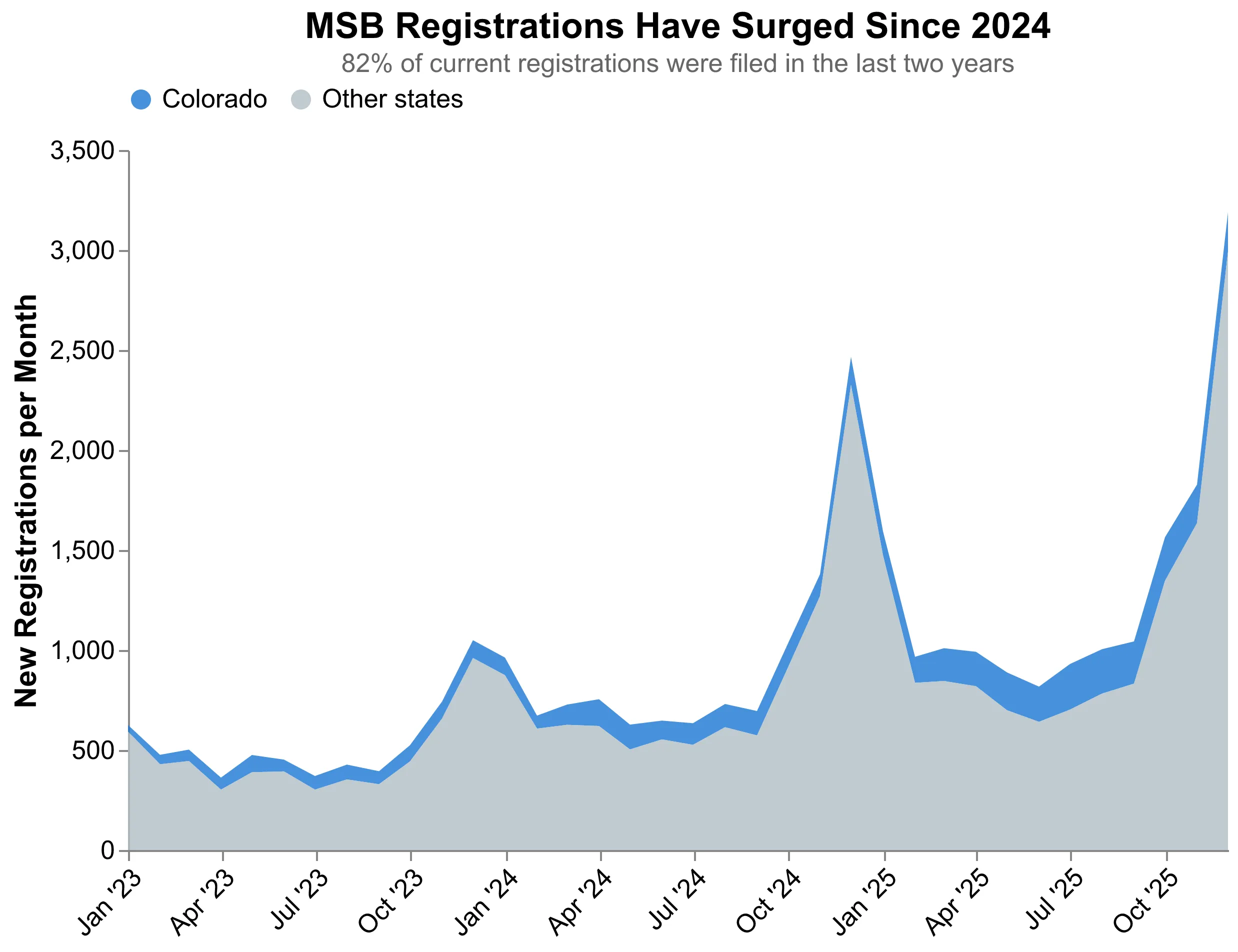
But when 941 of those registrations share a single mailbox address and claim to do everything everywhere, the registry may be generating noise rather than the signal it was designed to provide.
Methodology
Data source: FinCEN MSB Registrant data (msb.fincen.gov), downloaded February 2026; 35,821 active registrations after deduplication. Population figures from 2020 U.S. Census. State-level comparisons use registrants with a valid U.S. state address; Colorado-versus-other-states comparisons exclude Colorado from the baseline. Registration data is self-reported — FinCEN does not verify information submitted on Form 107. Analysis methodology and code available on request. All thanks and complaints will be gratefully received at Enigma.